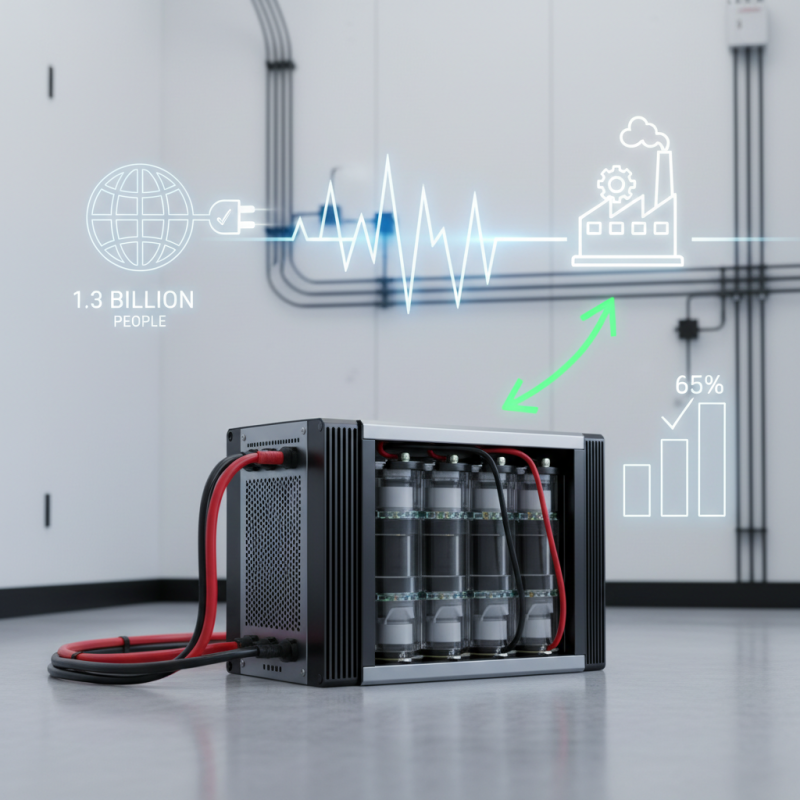
The increasing demand for reliable power solutions highlights the importance of selecting the right inverter. An Offline Inverter stands out for its exceptional efficiency in managing energy needs. According to a report by the International Energy Agency, around 1.3 billion people lack access to reliable electricity. This situation has fueled interest in solutions like Offline Inverters, which can provide dependable power in areas with unstable grids.
These inverters operate by supplying power directly from batteries when grid power is unavailable, ensuring continuity during outages. A survey conducted by the Renewable Energy Association indicates that 65% of businesses prioritize uninterrupted power for operations. Offline Inverters cater to this need by offering protection against voltage spikes and ensuring a steady power supply.
However, not all Offline Inverters are created equal. Users should consider factors such as battery life and efficiency ratings. Choosing the right model is crucial for maximizing performance. While there are various options, one must carefully evaluate individual requirements to make an informed choice. The landscape of power supply is evolving, making Offline Inverters a key player in the quest for reliability.
Offline inverters play a crucial role in power management. They convert direct current (DC) from batteries into alternating current (AC) for household appliances. Understanding how they function helps end-users optimize their energy needs. Unlike online inverters, offline versions activate during power failures. They provide instantaneous power supply but rely on the main grid under normal conditions.
For those considering an offline inverter, think about your appliance’s energy requirements. Calculating the wattage is essential. Choose an inverter that can handle your daily power usage. It ensures that your important devices remain operational during an outage.
Pay attention to the inverter's capacity. Selecting one too small may cause it to fail under load. An oversized inverter might waste energy during normal operation. It's also wise to think about surge protection; this adds an extra layer of safety for sensitive devices. Regularly test the inverter to ensure it's working correctly.
When choosing power solutions, offline inverters offer distinct advantages. They are reliable for basic electricity needs. Unlike online inverters, offline models work seamlessly with grid power. When the grid fails, they quickly switch to battery mode. This transition keeps essential devices running without interruption.
Tips: Regular maintenance is key. Check the battery health periodically. Ensure connections are secure to avoid performance issues.
Offline inverters tend to be cost-effective compared to their online counterparts. They consume less energy while idle, promoting efficiency. Their ability to handle surges adds to their reliability. However, they may not support heavy loads like other types. Users need to assess their power requirements before making a choice.
Tips: Analyze your devices’ power consumption. Consider using a wattmeter for accurate readings. This will help avoid overloading your inverter.
When considering power needs, offline inverters present unique advantages over other types. These devices deliver power directly from the source. This ensures reliability, especially during outages. Offline inverters automatically switch to battery power without delay. In contrast, online or line-interactive models may face transitional lag. This can impact sensitive electronics during power fluctuations.
One notable feature of offline inverters is simplicity. They are generally easier to install and maintain. Users can often find them more cost-effective than their counterparts. However, offline inverters are not without their challenges. They may not provide constant power as online models do. This can be an issue for critical operations requiring steady electricity.
In conclusion, while offline inverters serve well for many situations, careful consideration is needed. Assessing your specific power requirements is essential. Some may prefer the added features of other inverter types. Understanding the nuances helps make a more informed decision. This evaluation can lead to better use of resources and improved power management.
Choosing an offline inverter requires careful consideration of several factors to meet your power needs effectively. One vital aspect is the inverter's capacity. Assess your energy consumption first. Do a quick calculation of your daily energy use. Knowing this can help select an inverter that can handle your appliances without strain.
Another important factor is the inverter's efficiency rating. Higher efficiency means less energy loss during conversion. Look for ratings above 90%. It’s essential to remember that an inverter with lower efficiency will cost you more in electricity bills. Noise levels are also a concern. While some inverters operate quietly, others can be quite loud. Ensure your inverter will fit your environment.
Finally, consider the warranty and customer support offered. A robust warranty can safeguard your investment. Customer support should be reliable and responsive. Issues with inverters can arise unexpectedly. Knowing someone will be there to assist brings peace of mind. Reflect on these aspects carefully. They significantly impact your overall satisfaction and long-term costs.
Offline inverters are versatile devices with a wide range of applications in daily life. They primarily serve as a backup power source, ensuring essential electronics stay operational during outages. For example, during a storm, offline inverters can power crucial appliances like refrigerators and medical equipment. This helps prevent food spoilage and supports medical needs, which are vital for many households.
In addition to emergency situations, offline inverters are commonly used in small businesses. They help maintain continuity during power fluctuations, protecting sensitive machinery and electronics. A café, for instance, can keep its point-of-sale systems running smoothly, thereby avoiding disruptions and customer dissatisfaction. However, their limitations must be addressed. They generally offer limited capacity, which may not be enough for larger businesses or multiple devices at once. Users need to assess their power requirements carefully.
Despite their practicality, offline inverters can also lead to frustration if not properly managed. Users may underestimate battery life, leading to sudden power loss. Regular maintenance is vital for ensuring reliability. This means checking connections and replacing batteries when needed. These challenges remind us that while offline inverters can be incredibly useful, understanding their capabilities and limitations is essential for effective deployment in everyday life.
| Application | Power Rating (W) | Number of Devices Supported | Estimated Runtime (Hours) |
|---|---|---|---|
| Home Appliances | 600 | 3-4 | 4-6 |
| Office Equipment | 800 | 4-5 | 3-5 |
| Medical Devices | 500 | 1-2 | 6-8 |
| Entertainment Systems | 700 | 3-4 | 5-7 |
| Outdoor Equipment | 1000 | 2-3 | 4-5 |