Choosing the right Auto Parts Bearings for your vehicle can be a daunting task. Many vehicle owners overlook this critical component. "The quality of your auto parts bearings can significantly impact performance," says David Thompson, an industry expert at Bearing Solutions Inc. His insights emphasize the importance of making informed decisions.
Auto parts bearings are essential for smooth operation. They reduce friction and enhance the lifespan of your vehicle. Selecting the right type means understanding specifications, load requirements, and compatibility. Ignoring these factors could lead to costly repairs and safety issues.
Many factors contribute to making the right choice. Detail-oriented research is crucial. However, many consumers rush their decisions, potentially harming their vehicles. Recognizing the significance of quality in auto parts bearings will help you maintain vehicle performance and safety.
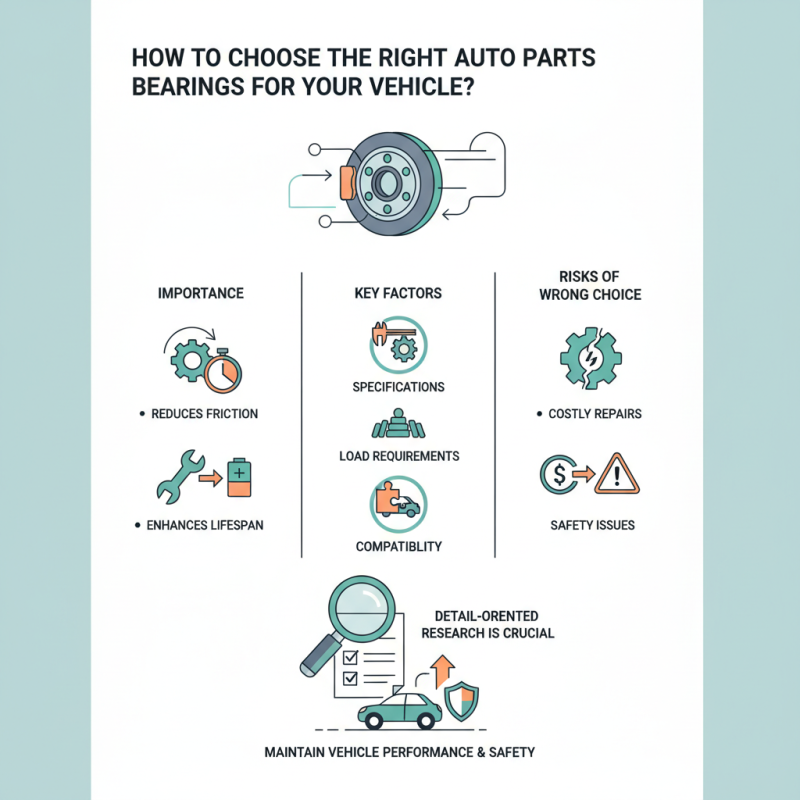
Bearings play a vital role in the smooth operation of a vehicle. They reduce friction between moving parts. This enhances overall efficiency and performance. Without bearings, components would wear out quickly. This could lead to costly repairs and decreased safety.
In automotive applications, bearings support various parts, including wheels, engines, and transmissions. Each type of bearing has a specific function. For instance, wheel bearings help keep the wheels rotating smoothly. Engine bearings support moving parts while minimizing noise and vibration. Choosing the right bearings can significantly affect a vehicle's longevity and functionality.
Sometimes, mechanics overlook the importance of quality bearings. They might choose based on price alone. This can lead to premature failures. It's essential to assess the vehicle's needs, load requirements, and operating conditions. A little research upfront can save time and money later.
When selecting auto parts bearings, understanding their types and functions is crucial. Each bearing plays a unique role in vehicle performance. Ball Bearings are common; they handle both radial and axial loads. Often used in wheels and motors, they offer low friction and smooth operation. Roller bearings are another type. They are designed for heavy loads. They provide greater surface area contact, which can enhance durability.
Thrust bearings focus on handling axial loads. These are vital in transmissions and steering systems. Needle bearings are lighter yet effective. They are often used in tight spaces, making them ideal for compact designs. Each bearing type has specific advantages. However, one may overlook the importance of choosing the right fit. Mismatched or low-quality bearings can lead to premature wear and costly repairs.
Understanding your vehicle's needs is essential. Do not rely solely on generic advice. Consider your vehicle's make and model. Also, check the conditions in which you drive. A wrong choice can impact performance negatively. Reflecting on these details will guide you in making better decisions.
When selecting bearings for your vehicle, consider several key factors. The type of vehicle plays a significant role in your choice. Different vehicles have different requirements. For example, a performance car may need specialized bearings, while a family sedan may work fine with standard options.
Material is another important aspect. Bearings come in various materials, like steel and ceramic. Steel is durable and cost-effective, but ceramic offers better performance. The environment also affects your choice. If you drive in extreme conditions, you may need corrosion-resistant bearings. Think about the driving habits too. Frequent driving in rough terrains demands tougher bearings.
Tips: Always check the specifications. This ensures compatibility with your vehicle. Don’t skip the installation process. Poor installation often leads to premature failures. Budget matters too. Higher-priced bearings might last longer, saving you money over time. Be aware of your choices. While cheaper options might tempt you, they may cost more in repairs down the road.
When it comes to auto parts bearings, maintenance is crucial. Studies show that around 30% of premature bearing failures arise from improper maintenance. Regular inspections can help detect issues early. Check for unusual noises or vibrations; these can indicate wear. If you hear grinding sounds, it may be time to replace the bearings. Don't ignore these signs.
Replacement is not always an easy task. Some DIY enthusiasts may feel confident but should consider professional help. A report by industry experts indicated that improper installation can lead to a 20% increase in failure rates. Using quality tools and following manufacturer specifications is essential. Even minor errors can result in major problems down the line.
Most vehicle owners overlook grease quality. However, using the wrong type can diminish the lifespan of bearings. Research shows that proper lubrication can extend bearing life by up to 50%. Regularly changing the oil and checking for contamination is vital. It’s a small effort with a significant payoff.
| Vehicle Type | Bearing Type | Material | Load Capacity (kg) | Maintenance Interval (km) |
|---|---|---|---|---|
| Sedan | Ball Bearing | Steel | 300 | 20,000 |
| SUV | Roller Bearing | Aluminum | 500 | 25,000 |
| Truck | Tapered Bearing | Bronze | 1000 | 30,000 |
| Motorcycle | Needle Bearing | Carbon Steel | 150 | 10,000 |
Choosing the right auto parts bearings can be tricky. Many people make common mistakes. Avoiding these oversights is crucial for your vehicle’s performance.
A frequent error is selecting bearings based on price alone. While cost is important, quality matters more. Cheap bearings may wear out quickly. This leads to higher long-term costs. Prioritize reliability over saving a few dollars.
Another mistake is ignoring compatibility. Not all bearings fit every vehicle model. Verify the specifications of your vehicle before making a purchase. Check the dimensions and type required. This step could save you headaches later.
Tips to consider: Always consult a professional if unsure. Make a list of the specifications you need. Look for guides or forums that discuss bearing selection. Engaging with others can enhance your understanding.
Finally, remember to evaluate your driving conditions. Harsh environments might demand more durable bearings. Reflect on where and how you drive. Making informed choices leads to better performance and safety on the road.