Choosing the right Forklift Lease can influence daily productivity, operating costs, and workplace reliability. A suitable agreement should match your workload, facility layout, lifting requirements, and planned equipment use. A warehouse moving pallets for six hours daily needs different support from a construction business working on uneven ground.
The monthly payment is only one part of the decision. Review the lease term, mileage or operating-hour limits, maintenance coverage, damage responsibilities, insurance requirements, and end-of-lease options. Ask who responds when the forklift stops beside a loaded dock at 7 a.m. Response time matters. So does parts availability. A cheap contract becomes less attractive when a repair delays shipments for two days.
Practical experience also shows that equipment condition deserves close attention. Check mast movement, tire wear, battery health, hydraulic leaks, safety lights, and service records before signing. An independent inspection can reveal issues that a polished sales presentation misses. Compare several offers using total ownership cost, not payment size alone. Include fuel or charging costs, operator training, scheduled servicing, and possible downtime.
Some businesses prefer newer forklifts, while others save money with well-maintained used units. Neither choice is automatically best. We should admit that forecasts can be imperfect. Order volumes change, expansion plans slip, and a forklift may face harsher conditions than expected. A careful lease review leaves room for those realities. It also gives your team clear evidence for choosing reliable equipment, practical terms, and a provider that supports your operation beyond the contract signature.
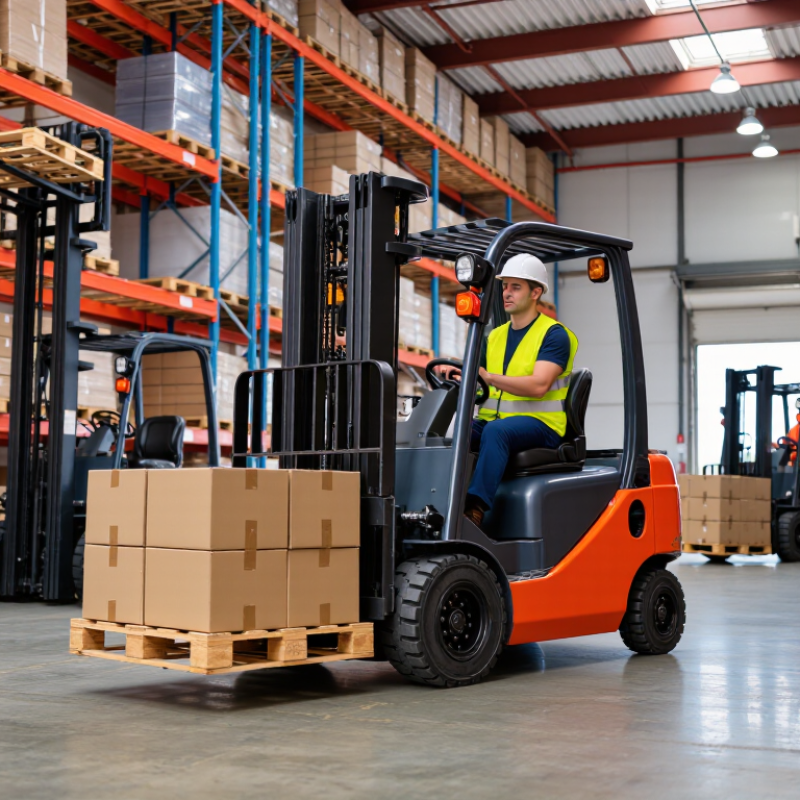
How to Choose the Best Forklift Lease for Your Business? Start with the load, not the monthly payment. Record the heaviest pallet, its dimensions, and the load center. A 5,000-pound truck may lift far less at extended reach. OSHA 29 CFR 1910.178 requires operators to follow the truck’s rated capacity and data plate. Check the required lift height, aisle width, turning radius, and rack clearance on site. Measure twice.
Fuel type should match the working environment. Electric forklifts suit enclosed warehouses because they produce no tailpipe emissions. Internal-combustion units may fit outdoor yards, heavy loads, or longer shifts, but ventilation and fuel storage need careful planning. OSHA identifies five powered industrial truck classes, from electric rider trucks to rough-terrain units. The class must match the attachment and operating surface. NIOSH reports that forklifts cause about 85 worker deaths and 34,900 serious injuries annually in the United States. Training is not a paperwork detail. It affects lease risk, uptime, and people.
Lease terms deserve the same scrutiny. Compare usage hours, maintenance coverage, battery charging needs, damage rules, and end-of-term inspections. A lower payment can hide expensive excess-hour charges. I have seen capacity estimates copied from old equipment files. That shortcut failed when pallet weights changed. Recheck the data plate, OSHA class, and actual route before signing. Some assumptions will still be imperfect. That is better than pretending they are certain.
Choosing a forklift lease should begin with actual working conditions, not a monthly payment. Track operating hours, lifting cycles, idle time, and peak shifts for at least four weeks. A truck running six hours daily needs a different lease structure than one used for occasional loading. Ask operators about battery changes, charging queues, and difficult floor areas. Small delays often reveal hidden utilization problems.
Energy use deserves a clear measurement plan. Record electricity consumed per shift, charging losses, and battery replacement dates. Electric equipment may appear cheaper, but poor charging habits can increase costs quickly. Compare energy costs with fuel, ventilation, and storage requirements. The numbers may surprise you. Estimates are useful, yet they are rarely perfect.
Maintenance costs should include scheduled service, tires, brakes, batteries, and technician travel time. Add the cost of downtime, including delayed shipments, overtime, and idle workers. Request maintenance response times and replacement equipment terms before signing. A low lease rate can become expensive after repeated breakdowns. In one review, downtime had been recorded only as “hours unavailable,” which missed the wider labor impact. That method needed correction. Build a simple monthly dashboard, then revisit it as workloads change.
Monthly operating-cost comparison for a 2,000 kg forklift working in a single-shift warehouse. The model measures energy, scheduled maintenance, and downtime costs, while the line shows productive utilization.
Electric equipment shows the lowest estimated monthly operating cost and the highest utilization in this scenario. Actual lease decisions should use your own operating hours, electricity or fuel prices, service rates, battery requirements, and downtime records.
How to Choose the Best Forklift Lease for Your Business?
Compare Operating and Finance Leases by Total Cost of Ownership
The lowest monthly payment rarely shows the real cost. In fleet reviews, I examine utilization, maintenance, downtime, insurance, and end-of-term charges. An operating lease usually offers predictable payments and easier fleet replacement. It may suit warehouses with changing workloads. However, mileage limits, damage fees, and return conditions can increase the final cost.
A finance lease often creates higher ownership responsibility. You may pay for repairs, tires, batteries, inspections, and eventual resale risk. Yet, long-term users can gain value when the forklift remains productive after payments end. Build a total cost model before signing. Include the deposit, interest, service hours, energy use, downtime, and expected residual value. Use actual maintenance records, not optimistic estimates.
Measure the work.
For example, a forklift moving 300 pallets weekly may justify ownership more than one used occasionally. Ask suppliers for transparent payment schedules and service assumptions. Request written terms for early termination and excess wear. These details matter. I have seen businesses choose finance leases too quickly because ownership felt cheaper. Later, unexpected repairs changed the calculation. A careful comparison may still contain uncertainty, especially when workload forecasts are weak. Recheck the model every six months. The best lease supports reliable operations, not merely attractive monthly pricing.
Choosing the best forklift lease requires more than comparing monthly payments. OSHA 29 CFR 1910.178 requires employers to train and certify each operator before use. Operators must also receive a performance evaluation at least every three years. This responsibility remains with the employer, even when the equipment is leased.
Select equipment that matches your aisles, floor surfaces, load weights, and daily operating hours. A short lease may reduce initial costs, but it can create rushed replacement decisions. Check whether the agreement supports inspections, maintenance access, and clear documentation.
Training should include truck-specific controls, load handling, stability, pedestrian awareness, and site hazards. Practical details matter, such as a narrow aisle or a wet loading area.
Tips: Ask the lessor for specifications, service response times, and maintenance records. Keep operator names, training dates, evaluation results, and corrective actions in one accessible file. Schedule the three-year evaluation before the deadline, not during a busy season. Refresh training sooner after an accident, near miss, unsafe operation, changed equipment, or changed workplace conditions. Do not assume an experienced operator needs less oversight. Experience can hide bad habits. A lease decision may look correct on paper, yet fail when the truck cannot safely handle a heavy pallet at the far end of the warehouse. Recheck the plan with supervisors and operators.
How to Choose the Best Forklift Lease for Your Business?
A 36–60-month lease can balance monthly cash flow and equipment reliability. Shorter terms may suit seasonal operations, while longer terms can reduce payments. Review your average operating hours, load weights, and warehouse conditions before negotiating. A forklift moving pallets eight hours daily faces different wear than one used occasionally.
Residual value deserves close attention. It affects monthly payments and the final purchase price. Ask how the lessor calculates that figure. Compare the projected residual with realistic used-equipment prices, not optimistic estimates. Buyout options should be clearly written, including fixed-price, fair-market-value, or return terms. Get it in writing. Vague wording creates expensive surprises.
Service limits also need practical detail. Negotiate annual hour allowances, response times, replacement equipment, and coverage for batteries, tires, brakes, and hydraulic parts. A service cap may look attractive until labor and travel costs sit outside it. Check maintenance records and inspection procedures before signing. I have seen businesses focus heavily on the payment, then overlook end-of-lease damage charges. That was a costly mistake. Ask for examples using your expected hours and working environment. Numbers can shift. Have an accountant or qualified equipment adviser review tax treatment, ownership costs, and local contract requirements before approval.
| Lease Structure | Typical Term | Indicative End-of-Term Residual | Best Fit | Key Negotiation Points | Main Trade-Off |
|---|---|---|---|---|---|
| Short-term operating lease | 24–36 months | Approximately 45%–65% of original cash price, depending on usage, age, and condition | Businesses with uncertain demand, seasonal operations, or frequent equipment upgrades | Request low return fees, flexible renewal terms, and clearly defined normal wear standards | Usually higher monthly payments and less ownership value at the end |
| Standard operating lease | 36–48 months | Approximately 30%–50% of original cash price | Companies seeking predictable monthly costs while preserving fleet flexibility | Cap annual service increases, define included preventive maintenance, and confirm excess-hour charges | Lower residual risk for the lessee, but the equipment is normally returned rather than owned |
| Long-term operating lease | 48–60 months | Approximately 20%–40% of original cash price | Stable operations with predictable utilization and a preference for lower monthly payments | Negotiate battery, tire, mast, and attachment coverage; limit end-of-term refurbishment charges | Lower monthly cost can be offset by higher maintenance exposure and reduced flexibility |
| Finance lease with purchase option | 36–60 months | Often a stated fixed buyout, nominal purchase amount, or fair-market-value option | Businesses expecting to keep the forklift for most of its useful life | Obtain the buyout amount in writing, confirm title-transfer conditions, and review early-payoff terms | More ownership potential, but the lessee generally carries more maintenance and residual-value risk |
| Cost or Contract Dimension | Reasonable Benchmark or Structure | What to Request in the Quote | Potential Red Flag |
|---|---|---|---|
| Lease term | 36–60 months is a common planning range for material-handling equipment | Show total scheduled payments, payment frequency, commencement date, and renewal terms | Automatic renewal without a clear notice period or written pricing schedule |
| Residual value | Set as a documented percentage or dollar amount based on expected age, operating hours, and condition | Separate residual value from the monthly payment and state whether it is guaranteed or estimated | Unspecified residual value or a final payment that is materially higher than expected market value |
| Buyout option | Fixed-price, nominal, or fair-market-value purchase option depending on the lease structure | List the exact buyout formula, exercise deadline, taxes, transfer fees, and title process | “Market value” is used without an independent valuation method or dispute process |
| Preventive maintenance | Service intervals should follow the equipment operating-hour schedule and manufacturer requirements | Specify labor, travel, scheduled parts, inspection reports, response times, and excluded repairs | Maintenance is advertised as included but wear parts, travel, or emergency labor are excluded |
| Service cap | Negotiate an annual or full-term cap on billable service costs | Define the cap amount, covered components, annual reset rules, and approval process for over-cap work | No limit on labor-rate increases, call-out charges, or repair authorization thresholds |
| Operating hours | Use an agreed annual hour allowance based on actual fleet utilization | State included hours, meter-reading method, excess-hour rate, and treatment of meter failure | Excess-hour charges are uncapped or calculated from an unclear starting meter reading |
| Return condition | Normal wear should be defined with measurable limits for tires, forks, mast, battery, paint, and safety equipment | Attach a condition guide with inspection photographs and a pre-return inspection process | Return standards are subjective or allow unilateral refurbishment charges |
| Payment flexibility | Monthly payments are common; quarterly or seasonal schedules may suit variable cash flow | Compare payment timing, advance payments, deposits, security amounts, and late-payment fees | Large undisclosed upfront charges or penalties that apply before delivery |
| Early termination | Should include a defined payoff or return calculation rather than an open-ended penalty | Request a written schedule for termination at 12, 24, 36, and 48 months | Early termination liability includes all remaining payments with no credit for resale value |
| Insurance and taxes | Responsibility varies by contract and jurisdiction | Identify property insurance, liability coverage, sales or use taxes, registration, and loss-damage obligations | Insurance requirements or tax treatment are omitted from the total-cost calculation |