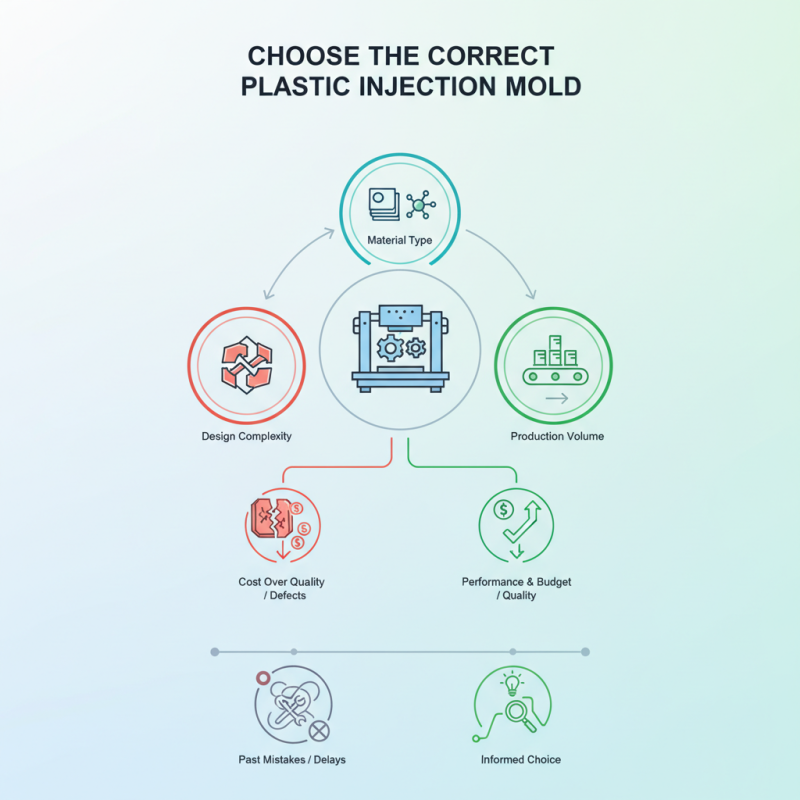
Choosing the right Plastic Injection Mold is crucial for successful manufacturing. The right mold impacts production efficiency, cost, and product quality. Many factors come into play when selecting a mold, including material type, design complexity, and production volume.
Understanding these factors can be challenging. Many manufacturers make the mistake of prioritizing cost over quality. A cheaper mold may lead to higher long-term expenses due to defects and rework. Evaluating the intended use of the mold is essential. Consider the specific characteristics of the end product. It requires a careful balance between performance and budget.
Reflecting on past decisions can also enhance the selection process. Mistakes made in mold selection often lead to delays and increased costs. Manufacturers should analyze their needs thoroughly. Learning from previous experiences can guide the right choice. Ultimately, a well-chosen Plastic Injection Mold can significantly enhance overall production outcomes.
Plastic injection molding is a critical manufacturing process in various industries. It allows for high-volume production of intricate parts. Understanding its applications is essential for businesses aiming to optimize their manufacturing processes. According to industry reports, the global market for injection molded plastics is projected to reach $400 billion by 2026. This growth reflects the increasing demand across sectors like automotive, consumer goods, and healthcare.
The versatility of injection molding enables the creation of complex designs with remarkable precision. Applications vary from packaging to medical devices. However, the selection of molds can be challenging. Many factors impact mold design, including material type, part geometry, and manufacturing costs. A lack of thorough analysis can lead to costly errors. In fact, reports indicate that up to 30% of molds may require rework due to design flaws. This highlights the need for careful planning and prototype testing.
Mold-making involves significant investment and intricate detail. It’s not just about choosing the right material but also understanding the end-use of the product. Specific demands, such as temperature resistance or flexibility, should be considered early in the design phase. Mistakes in this stage can result in delays and unexpected expenses. Continuous improvement and feedback are vital in refining the process and achieving higher quality outputs.
Choosing the right plastic injection mold is crucial for product quality. One key factor is material compatibility. Different plastics have unique processing requirements. Knowing the right material helps avoid issues during molding. Test the material with small samples before finalizing your decision.
The complexity of the mold design is another important factor. Complex designs may require more time and higher costs. Consider the balance between design intricacy and production efficiency. A simpler mold might be more effective for larger production runs. It’s essential to assess the long-term production needs.
Budget constraints can also influence mold selection. High-quality molds often come with a hefty price tag. It’s a common reflection point—should you invest in quality upfront? Sometimes, saving costs on the mold leads to issues later. Factor in maintenance and repair costs as well.
When choosing a plastic injection mold, understanding its types is crucial. There are several mold types available, each serving a specific purpose. For example, single-cavity molds are ideal for low-volume production. They create one part per cycle, making them cost-effective for small batches.
On the other hand, multi-cavity molds allow for the production of multiple parts in one cycle. This increases efficiency and reduces costs for large-volume orders. Hot runner molds are another interesting option. They minimize material waste by keeping plastic molten.
Tip: Assess your production needs before selecting a mold type. Consider the volume, part complexity, and materials involved. Sometimes, opting for a simpler mold can save time and resources.
Don’t overlook the possibility of wear and tear. Molds experience stress over time, affecting output quality. Regular maintenance is essential. This can prevent costly downtime and enhance the mold's lifespan.
Tip: Document any issues with molds. Tracking problems can offer insights for future projects. Analyze past choices to make better decisions.
Choosing the right plastic injection mold is crucial for manufacturing success. One major factor to consider is cost. Quality molds may have a higher initial price but can save money over time. Cheaper molds may wear quickly, leading to additional costs. Evaluate how often you'll produce parts. High-volume runs might justify a more expensive, durable mold.
Quality is just as important. A well-made mold ensures consistent part production. Look for precision in the mold's design. Small flaws can lead to defects in the finished product. Inspect past work by the mold maker. This can reveal their capabilities.
**Tips:** Always ask for samples. Test the molds in real production scenarios if possible. Research your mold maker's reputation—read reviews and testimonials. Don't overlook warranty terms. A good warranty can offer peace of mind. Remember, finding the balance between cost and quality is essential. Adjust your expectations as you learn from the process.
| Criteria | Description | Importance Level (1-5) | Average Cost ($) |
|---|---|---|---|
| Mold Material | Type of material used for mold construction, impacting durability and cost | 5 | 2000 - 5000 |
| Mold Design Complexity | Degree of complexity in the mold design affects manufacturing time and cost | 4 | 1500 - 4000 |
| Lead Time | Time taken from order placement to mold delivery | 3 | 0 - 1000 |
| Tolerance Levels | Precision required for the molded parts, which can influence cost | 5 | 1000 - 3000 |
| Production Volume | Quantity of parts needed, affecting mold cost-efficiency | 4 | 500 - 2000 |
| After-Sales Support | Support for mold maintenance and troubleshooting post-production | 3 | 0 - 500 |
The maintenance of plastic injection molds is crucial for their longevity. Regular inspection helps to identify wear and tear. Minor issues can escalate if not addressed promptly. A diligent schedule for cleaning can prevent contamination of future production runs. Keep molds free from debris to ensure smooth operation.
Understanding the lifespan of these molds is equally important. Molds can last for years, but factors like material quality and usage frequency play a significant role. Overuse can lead to premature failure. It's essential to monitor their condition frequently. If signs of damage appear, it’s wise to discuss repair options immediately.
Proper storage also affects a mold's lifespan. Store molds in a dry, temperature-controlled environment. Avoid high humidity, as it can cause rust. Periodic maintenance checks are needed even when molds are not in use. Ignoring these aspects can lead to costly replacements down the line. Balancing usage and care is key to maximizing the investment in plastic injection molds.