Skip to content

China Best Floating Pump Aerator for Sale How to Choose?

Choosing the China best Floating Pump Aerator for sale requires more than comparing prices and motor power. A pond may look calm while oxygen levels fall sharply before sunrise. Fish then gather near the surface, moving slowly and showing clear stress. That moment can expose a poor equipment decision.

Aquaculture authority Dr. Claude E. Boyd has stated, “Aeration is the most important means of increasing dissolved oxygen concentration in aquaculture ponds.” His observation remains practical for farms, wastewater ponds, and ornamental lakes. A reliable Floating Pump Aerator should create strong circulation, not merely splash water. Examine oxygen-transfer performance, flow rate, power consumption, float stability, cable protection, and corrosion resistance. Stainless steel components can matter in brackish or mineral-rich water. Easy cleaning matters too. Mud, algae, and leaves can reduce performance within days.

Do not trust impressive photographs alone. Ask for test conditions, operating data, warranty terms, and replacement-part availability. A compact unit may suit a small pond, but it could underperform in a deep commercial basin. Conversely, an oversized aerator can waste electricity and disturb fish. Site measurements are often incomplete. That is a weakness worth admitting. Water depth, stocking density, weather, and organic load can change the result.

This guide explores how to compare Chinese manufacturers and select equipment with dependable performance. It focuses on evidence, practical installation details, and long-term operating value. The cheapest choice is rarely the safest choice. A better decision begins with the pond itself.
China Best Floating Pump Aerator for Sale How to Choose?

What Is a Floating Pump Aerator and How Does It Work?

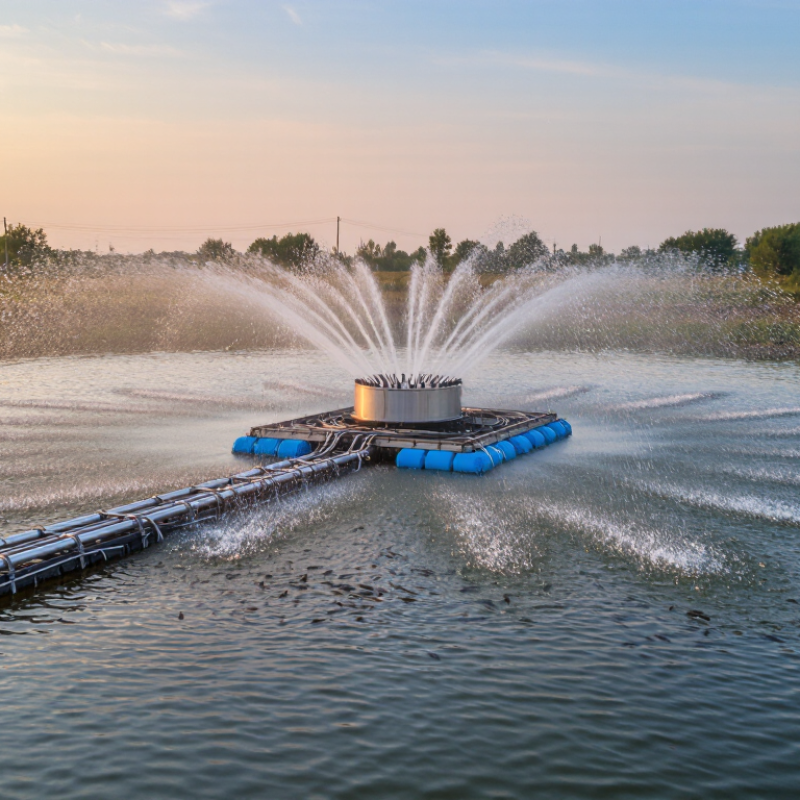
A floating pump aerator is a water treatment device that adds oxygen to ponds, tanks, and reservoirs. It stays on the surface with floats or a stable platform. An electric motor drives an impeller below the waterline. The impeller pulls water upward and throws it across the surface. This creates splashing, droplets, and constant circulation. More water meets the air, allowing oxygen to dissolve more efficiently. Watch the surface.

The right model depends on pond size, depth, fish density, and water temperature. Check the rated flow, power use, oxygen transfer rate, and coverage area. A powerful motor may waste electricity in a small pond. A weak unit may leave stagnant zones near the edges. During pond maintenance work, operators often inspect spray height and circulation direction, not just horsepower. Ask for test data under conditions similar to your site.

For equipment sourced from China, request clear specifications, electrical safety documents, spare-part details, and a written warranty. Check whether the float material resists sunlight and whether the motor housing suits continuous operation. Screens should block leaves without restricting flow. Noise also matters near homes or working areas. Some sellers publish impressive oxygen figures, but testing methods can differ. I would question any claim without water temperature, depth, and testing conditions. A small trial installation may reveal problems that a catalog misses.

Which Water Conditions Require a Floating Pump Aerator?

China Best Floating Pump Aerator for Sale How to Choose?

Which Water Conditions Require a Floating Pump Aerator?

A floating pump aerator suits ponds with weak circulation, surface scum, or recurring low oxygen. Warm water holds less oxygen, while fish, microbes, and decaying plants consume it quickly. The U.S. Environmental Protection Agency identifies 5 mg/L as a common dissolved oxygen benchmark for healthy aquatic life. Readings near 2 mg/L indicate severe oxygen stress.

These units are useful during hot weather, after heavy rain, or when algae die suddenly. They also help stocked ponds with dense fish populations and high organic waste. A floating pump moves water through the surface, breaks stagnant layers, and improves gas exchange.

However, it cannot solve every problem. Deep ponds may need vertical mixing, while severe nutrient pollution requires source control. That distinction is often missed.

Tips:

Measure dissolved oxygen before sunrise, when levels are usually lowest. Many aquaculture guidelines, including FAO technical materials, favor maintaining roughly 5 mg/L for sensitive cultured species.

Place the aerator where water circulation reaches quiet corners, not only near the dock. Check temperature, depth, stocking density, and sludge levels before choosing horsepower.

An oversized unit can disturb sediment and waste energy. An undersized unit may look active but provide little protection.

Field results can vary, so keep a simple weekly log and adjust after reviewing real measurements.

How to Compare Pump Power, Oxygen Transfer, and Coverage

When choosing the best floating pump aerator for sale, compare useful performance, not motor size alone. Pump power is only the starting point. A larger motor may move more water, but it can also consume more electricity and create excessive turbulence. Power is not everything.

Check the pump’s flow rate, discharge height, and operating depth. These figures show how efficiently the motor handles real pond conditions. Oxygen transfer should be measured in kilograms of oxygen per kilowatt-hour, preferably under recognized testing methods. Ask for test temperature, water quality, and salinity details. Results can change in warm, muddy water. Measure the water.

Coverage depends on circulation, pond shape, depth, and fish density. A wide spray pattern may look impressive but leave stagnant water near corners or banks. Walk around the pond during operation. Look for floating debris, surface movement, and areas without visible circulation. In my field checks, one aerator performed well near the inlet but struggled at the far bank because the pond was unusually narrow.

Use the stated coverage as a planning reference, not a guarantee. Independent oxygen testing with a dissolved oxygen meter gives stronger evidence than promotional figures. Compare noise, corrosion protection, cable safety, maintenance access, and replacement parts as well. A reliable unit should deliver stable oxygen transfer over several hours, not only during a short demonstration. Some calculations may still be imperfect, especially when weather and stocking levels change.

What Features Define a Reliable Chinese Floating Aerator?

A reliable Chinese floating aerator should remain steady when wind, waves, and changing water levels challenge the pond. A wide, balanced float reduces tilting during operation. Check the float material for UV resistance, sealed joints, and resistance to cracking in cold weather. Small details matter.

The motor should deliver stable power without excessive vibration or heat. Look for sealed bearings, overload protection, and a corrosion-resistant housing. The impeller design must match the pond’s depth and water quality. In practical pond trials, clear circulation around the machine is more useful than an impressive oxygen figure on paper. Noise also deserves attention. A harsh mechanical sound may indicate poor alignment or weak bearings.

Electrical safety needs careful verification. A dependable unit should include properly protected cables, secure connectors, and clear operating instructions. Ask the manufacturer for test records covering oxygen transfer, power consumption, flotation stability, and continuous running time. Factory inspection photos can help, but they do not replace independent testing. Be cautious here.

After-sales support is another defining feature. Spare impellers, seals, floats, and motors should be available with clear replacement guidance. Response time matters when fish depend on daily aeration. I have seen buyers focus only on price and later struggle with missing parts. That mistake is easy to repeat. A reliable supplier welcomes technical questions, explains performance limits, and admits when a model does not suit a specific pond.

China Best Floating Pump Aerator for Sale: How to Choose?

Key features that define a reliable floating aerator for aquaculture ponds.

The chart presents a practical procurement weighting for comparing floating pump aerators. Aeration performance and energy efficiency should receive the highest priority, while corrosion resistance, float stability, clog resistance, and maintenance access support dependable long-term operation. Always verify test conditions, materials, protection ratings, and after-sales support before purchasing.

How to Choose the Right Supplier, Price, and After-Sales Support

China Best Floating Pump Aerator for Sale: How to Choose?

Choosing a floating pump aerator from China requires more than comparing online prices. In pond projects, I check oxygen demand, water depth, operating hours, and exposed materials. Ask the supplier for airflow, motor power, float dimensions, cable length, and tested oxygen-transfer data. Request real installation photos. They often reveal details that brochures hide.

A low quote can become expensive after adding shipping, spare parts, and energy use. Compare complete quotations, including packaging, replacement impellers, control boxes, and warranty coverage. Ask whether the quoted price applies to one sample or a larger order. Clarify payment stages and production time in writing. Small gaps matter.

Reliable after-sales support should include installation guidance, troubleshooting videos, and reachable technical staff. Confirm response times before ordering. Ask how faults are diagnosed when the unit operates far from the factory. A two-year warranty sounds useful, but exclusions deserve careful reading. I would request a sample test under similar water conditions. Results may differ from laboratory figures. That is worth admitting. Real pond water is less predictable.

China Best Floating Pump Aerator for Sale: How to Choose the Right Supplier, Price, and After-Sales Support

Evaluation Dimension Recommended Target Budget Supplier Profile Mid-Range Supplier Profile Premium Export Supplier Profile What to Verify Before Ordering
Typical application Small ponds, farms, fish tanks, and emergency oxygenation Seasonal or light-duty use Daily aquaculture operation Continuous commercial aquaculture and wastewater applications Ask for a duty-cycle recommendation based on pond size, depth, stocking density, and water quality
Common motor power 1.5–7.5 kW for many floating pump aerator installations 1.5–3 kW 3–5.5 kW 5.5–7.5 kW or customized multi-unit systems Confirm rated voltage, phase, frequency, motor efficiency, overload protection, and plug or cable requirements
Indicative aeration capacity Compare oxygen transfer under stated test conditions, not motor power alone Approximately 1.5–4 kg O2/h, depending on design and water conditions Approximately 3–8 kg O2/h, depending on design and water conditions Approximately 6–12 kg O2/h, depending on design and water conditions Request test medium, water temperature, dissolved oxygen, water depth, and test method; field performance may differ from laboratory results
Indicative purchase price Compare the complete operating package rather than the motor price only USD 600–1,300 for a typical 1.5–3 kW unit USD 1,100–2,400 for a typical 3–5.5 kW unit USD 2,000–4,500 for a typical 5.5–7.5 kW unit These are indicative export ranges before freight, duties, taxes, installation, and control equipment; obtain a written quotation
Included equipment A complete, installation-ready package Motor, impeller, float, and basic fasteners; accessories may be optional Aerator, floats, protective screen, mounting hardware, and standard cable Complete unit with control panel options, spare parts, safety protection, and installation documentation Check float quantity, cable length, control box, circuit protection, lifting points, spare parts, and anchoring components
Float and structural materials UV-resistant, corrosion-resistant, and mechanically stable construction Molded polymer floats and basic stainless-steel hardware UV-stabilized polyethylene or similar float material with improved stainless-steel fasteners Heavy-duty floats, corrosion-resistant hardware, reinforced frame, and replaceable wear components Request material specifications, float buoyancy, hardware grade, UV test information, and photographs of welds or joints
Electrical protection Protection suitable for wet outdoor environments Basic thermal overload protection; enclosure details may vary Thermal overload, leakage protection recommendation, and weather-resistant control enclosure Motor protection, phase-loss protection, current monitoring, emergency stop, and optional remote control Verify enclosure rating, grounding method, residual-current protection, cable insulation, and local electrical compliance
Typical lead time Shorter lead time is valuable for urgent pond installation About 7–15 working days for standard models About 15–30 working days, depending on quantity and configuration About 25–45 working days for customized systems or larger orders Confirm production schedule, inspection date, packaging date, and shipping terms in the purchase contract
Warranty expectation Written warranty with clearly defined exclusions Usually 12 months from shipment or commissioning, subject to terms Commonly 12–18 months with documented operating conditions Commonly 18–24 months for selected components or complete systems, subject to contract Check warranty start date, covered parts, labor responsibility, shipping costs, exclusions, and claim response time
Spare-parts availability Critical wear parts should be available throughout the equipment life Basic impellers, bearings, seals, and fasteners available on request Standard service kits and commonly used electrical components available Recommended two-year spare-parts list, part numbers, service manuals, and planned stock support Ask for prices and delivery times for impellers, mechanical seals, bearings, floats, cables, and control components
Technical support Fast troubleshooting and clear installation instructions Basic manuals and remote messaging support Application guidance, wiring diagrams, installation videos, and remote troubleshooting Pre-sale sizing, commissioning guidance, maintenance schedules, and documented corrective-action support Request sample manuals, average response time, escalation procedure, and availability of technical staff in your time zone
Quality verification Independent inspection or documented factory testing before shipment Basic factory inspection and visual testing Routine electrical testing, vibration checks, and operating test records Pre-shipment inspection, traceable test records, dimensional checks, and optional third-party inspection Confirm inspection checklist, test-report format, serial-number traceability, and acceptance criteria
Best choice for Select the supplier whose total operating value matches the application risk Small projects with limited operating hours and a low initial budget Most routine fish-farm projects requiring a balance of price and support Critical production sites where downtime, energy use, and service response are costly Calculate total cost of ownership: purchase price, power consumption, maintenance, freight, downtime, and spare parts
Pricing and performance note: The figures above are indicative purchasing ranges for standard floating pump aerators and are not quotations from a specific company or brand. Actual prices and oxygen-transfer performance vary with motor power, impeller design, materials, voltage, order quantity, customization, test conditions, shipping terms, and destination country. Ask every supplier to quote the same configuration and provide comparable test data.