Skip to content

How to Choose the Right Sealing Compound?

Choosing the right Sealing Compound protects joints from water, air, vibration, chemicals, and temperature changes. The wrong product may harden, shrink, stain nearby materials, or fail after repeated movement. A neat bead is not proof of long-term performance.

Industry data shows why this decision deserves careful attention. Grand View Research’s Sealants Market Size, Share and Trends Analysis Report forecasts continued global market growth through 2030, driven by construction, automotive, and infrastructure demand. MarketsandMarkets also identifies silicone, polyurethane, and acrylic technologies as major product categories. These reports indicate a competitive market, but they do not make every compound suitable for every joint. Application conditions still matter more than popularity.

Start with the joint itself. Measure its width, depth, movement, and exposure to sunlight or standing water. Check whether the surface is concrete, glass, metal, painted steel, or a porous substrate. Then review technical data sheets for adhesion, service temperature, curing time, chemical resistance, and movement capability. ASTM C920 and ISO 11600 provide useful performance frameworks for elastic sealants. For building applications, EN 15651 can also support product selection in relevant European projects.

Small details matter. A dusty joint can defeat an expensive compound. A damp surface can delay curing. Primer may be necessary. Test first.

There is no universal best formula. That assumption deserves challenge. Even experienced installers can overlook substrate contamination or joint design. This guide therefore combines manufacturer data, recognized standards, and practical job-site judgment. Reliable selection means matching the Sealing Compound to the joint’s actual environment, not merely choosing the cheapest tube or the strongest marketing claim.
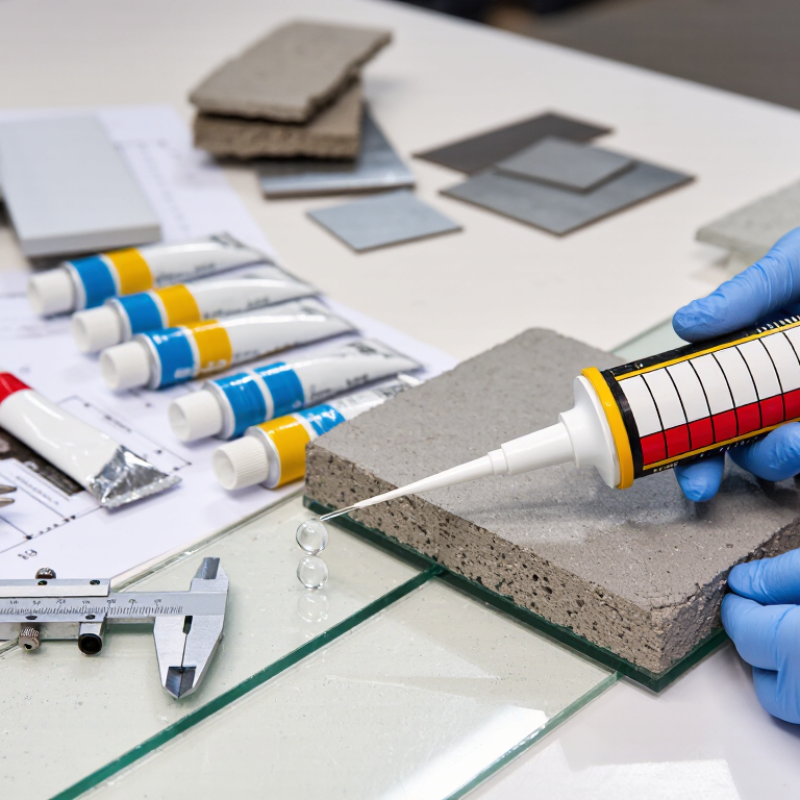
How to Choose the Right Sealing Compound?

What Is a Sealing Compound and Where Is It Used?

How to Choose the Right Sealing Compound?

What Is a Sealing Compound and Where Is It Used?

A sealing compound is a paste, liquid, or gel that closes joints, gaps, and threaded connections. It blocks water, air, dust, chemicals, and unwanted vibration. Common applications include windows, concrete joints, plumbing, vehicle assemblies, electrical enclosures, and industrial pipelines. The right compound depends on the surface, temperature, pressure, movement, and chemical exposure.

Grand View Research reported that the global sealants market was valued at approximately USD 10.8 billion in 2023. Its report also projects continued growth through 2030, driven partly by construction and transportation demand. This growth does not make selection easier. A product that performs well on metal may fail on glass, painted surfaces, or flexible plastics. ASTM C920 classifications can help verify movement capability and performance. Still, testing the actual joint remains more reliable than reading a label alone.

Tips: Clean and dry the surfaces before application. Check the technical data sheet for curing time and service temperature. Leave enough space for movement. A thicker bead is not always stronger. In field inspections, many failures begin with poor surface preparation, not the compound itself. I have also seen a perfectly smooth seal fail after repeated expansion. That detail is easy to overlook. When conditions are uncertain, test a small joint first and record the result.

Which Properties Should a Sealing Compound Have?

How to Choose the Right Sealing Compound?

Which Properties Should a Sealing Compound Have?

A reliable sealing compound must match the joint, not merely the product label. Check operating temperature, pressure, movement, and surface material before application. A flange may appear rigid, yet vibration and thermal cycling can open microscopic paths. The compound needs strong adhesion, controlled flexibility, and resistance to compression set. ISO 11600 classifies sealants by movement capability and application type, offering a useful starting point for specification.

Chemical resistance deserves equal attention. Oils, coolants, solvents, and cleaning agents can soften or swell an unsuitable compound. The World Corrosion Organization’s IMPACT study estimated global corrosion costs at 2.5 trillion dollars, or 3.4% of global GDP. Proper sealing cannot prevent every corrosion mechanism, but it can limit moisture and contaminant entry. Small details matter. Surface preparation matters more than many teams expect.

A practical selection should also consider cure time, storage life, and rework requirements. In compressed-air systems, the U.S. Department of Energy reports that leaks commonly waste 20–30% of output, with poorly maintained systems exceeding 30% in some cases. That figure is not a direct sealant guarantee, but it shows why leakage testing matters. Apply a thin, continuous bead, allow the stated cure period, and inspect the joint under real operating conditions. I have seen technically correct compounds fail after rushed cleaning or uneven bolt tightening. Material choice is important. Installation discipline is often the weaker link.

How to Match the Compound to Materials and Operating Conditions?

Choosing a sealing compound starts with the materials it must touch. Metal, glass, painted surfaces, plastics, and porous concrete can react differently. A compound that bonds firmly to steel may peel from low-energy plastic. Check the material’s surface treatment, cleanliness, and porosity before selecting a product.

Small details matter. Temperature is only one operating condition. Pressure, vibration, joint movement, moisture, chemicals, and ultraviolet exposure also affect service life. A seal exposed to hot oil needs different resistance from one used around clean water. Consider the joint design, too. A narrow gap may restrict movement and create stress during expansion.

Use technical data sheets, compatibility charts, and documented test results as starting points. Then test the compound on actual substrates, including coatings and primers. Hold the sample at expected temperatures and expose it to the working fluid. Inspect adhesion, cracking, swelling, and hardness after curing. Real service can be less predictable. A neat bead does not prove long-term performance. Field inspections have shown that poor cleaning can defeat an otherwise suitable compound. Even careful selection can be wrong when the operating conditions were estimated too generously. Record the test method, cure time, and results before approving the application.

How to Compare Application Methods, Compatibility, and Safety?

How to Choose the Right Sealing Compound?

Choosing a sealing compound starts with the application method, not the cartridge label. Manual dispensing suits small joints and repairs. Pneumatic guns provide steadier pressure on long seams. Automated dispensing improves repeatability, but it demands accurate viscosity control. A neat bead can still hide poor adhesion.

Compatibility requires testing the sealant against every contact surface. Concrete, glass, coated metal, plastics, and porous stone can react differently. ASTM C920 classifies elastomeric sealants by movement capability, including 12.5, 25, 50, and 100/50 classes. Select the movement class according to joint design, not marketing language. Check cure time, temperature limits, primer needs, and water exposure. The ASTM classification helps, but it cannot replace a project-specific adhesion test. That is an uncomfortable detail.

Tips: Clean a small test area first. Apply a short bead. Let it cure fully. Then inspect adhesion, surface staining, bubbles, and edge lifting. Repeat after heat or moisture exposure when conditions are severe. Keep the Safety Data Sheet nearby. OSHA’s Hazard Communication Standard requires accessible hazard information and worker training. NIOSH also recommends reviewing exposure controls before handling chemical products. Ventilation, gloves, and eye protection should match the documented risks. Do not assume a low-odor product is harmless. Mistakes often begin with that assumption.

How to Test, Apply, and Maintain the Selected Sealing Compound?

Before applying a sealing compound, test it under realistic conditions. I usually prepare small samples on the actual substrates, such as metal, glass, or painted surfaces. Clean one sample carefully and leave another slightly contaminated. This reveals how sensitive the compound is to preparation. Check adhesion after curing, then inspect the bond for peeling, bubbles, or soft edges. Test temperature, moisture, movement, and pressure when the joint will face those conditions. A simple trial can prevent an expensive repair.

Application requires patience and control. Remove dust, oil, loose coating, and standing water unless the product instructions allow moisture. Confirm the surface temperature and curing conditions from the technical data sheet. Apply a continuous bead with steady pressure. Avoid trapping air. Tool the surface with a clean, compatible tool before skin formation begins. I have learned that rushing this step often creates weak corners. Wear suitable protective equipment and provide ventilation according to the safety documentation. Do not rely on appearance alone.

Maintenance should begin after full curing, not immediately after installation. Record the application date, batch information, weather, and observed defects. Inspect joints at planned intervals, especially around corners, fasteners, and areas exposed to vibration. Look for cracking, discoloration, shrinkage, or loss of adhesion. Small defects should be assessed before moisture enters the joint. However, inspection methods are not perfect. A firm surface can hide internal separation. When results seem uncertain, remove a small section for closer examination and repeat the compatibility test before resealing.