Skip to content

What Is the Best Drip Hose from China?

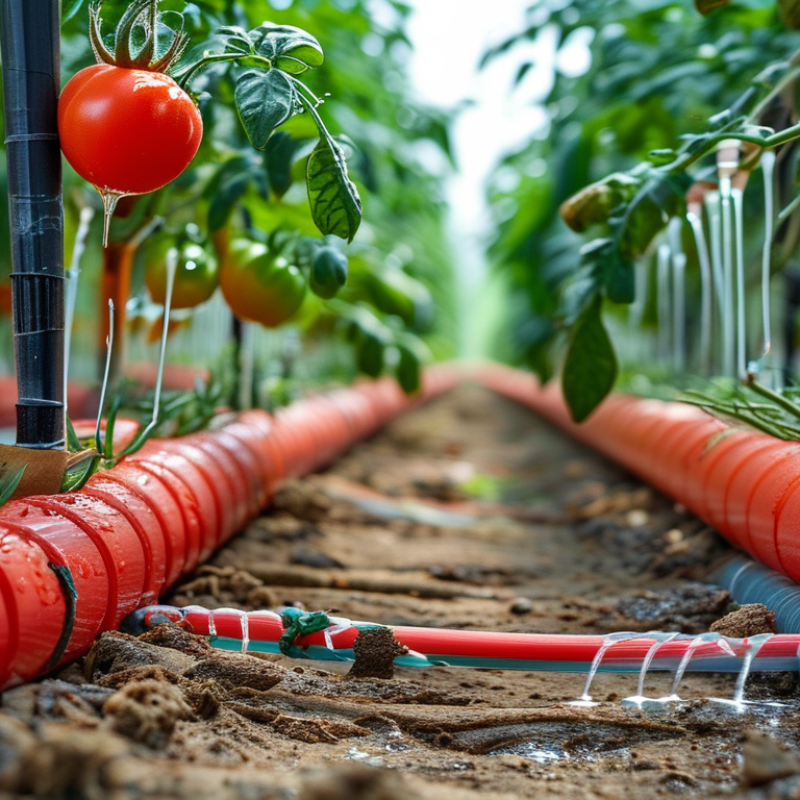
Choosing the best Drip Hose from China requires more than comparing prices on a product page. A reliable choice should match your crops, water pressure, soil type, and installation distance. Chinese manufacturers offer many options, including flat drip tape, round dripline, and thicker garden hoses. Each design performs differently in a tomato field, greenhouse bed, or orchard row.

Look closely at wall thickness, emitter spacing, flow rate, and pressure range. A hose with 30-centimeter emitter spacing may suit vegetables, while fruit trees often need wider spacing. Ask suppliers for material details, sample rolls, production photos, and test reports. Polyethylene quality matters. Recycled material can reduce cost, but it may weaken flexibility and shorten service life. That trade-off deserves attention.

Check whether the supplier can maintain consistent flow across a full roll. Small differences between emitters can create dry plants and wasted water. Request a sample before ordering a container. Test it with your actual pump, filter, and fittings. Observe leaks, kinks, clogging, and pressure changes. Simple testing reveals more than polished brochures.

Certification can support trust, but certificates should be verified and matched to the actual product. Factory experience, export records, inspection procedures, and responsive communication also matter. The cheapest Drip Hose may become expensive after repeated replacement. Still, no supplier is perfect. Even a well-made hose can fail when filtration is poor or installation is careless.

The best decision balances performance, durability, documentation, and after-sales support. This guide examines those factors closely, helping buyers compare Chinese Drip Hose manufacturers with clearer expectations and fewer costly surprises.
What Is the Best Drip Hose from China?

Types of Drip Hoses Manufactured in China

Choosing the best drip hose from China starts with understanding its type, not its price. Flat drip tape is lightweight, economical, and suitable for seasonal vegetables or row crops. Round dripline has stronger walls and works better in orchards, nurseries, and longer installations. Thin-wall products reduce shipping weight, while thick-wall hoses tolerate repeated use. Small details matter.

China’s manufacturers also produce pressure-compensating and non-pressure-compensating drip hoses. Pressure-compensating emitters help maintain similar flow on uneven land. Non-compensating models are simpler and often cost less on level fields. Subsurface dripline can sit below the soil surface, reducing evaporation and surface damage. Greenhouse hoses may use closer emitter spacing for containers and dense planting. Typical emitter spacing ranges from 10 to 40 centimetres, with flow rates commonly near 1 to 2 litres per hour.

The FAO AQUASTAT database reports that agriculture accounts for roughly 70% of global freshwater withdrawals. The UN World Water Development Report 2023 gives a similar warning about agricultural water pressure. Efficient application is therefore practical, not decorative. Buyers should check wall thickness, filtration requirements, working pressure, UV resistance, and connector compatibility. ISO 9261 testing is useful evidence for emitter performance and durability. A catalogue can look precise, yet field results may disagree. Poor filtration can clog even a well-made hose. It is not universal. Test a short section first, measure discharge from several emitters, and inspect the hose after one growing cycle.

Key Materials and Technical Features to Compare

What Is the Best Drip Hose from China?

Key Materials and Technical Features to Compare

A good drip hose starts with the resin, not the catalog photograph. Agricultural irrigation consumes about 70% of global freshwater withdrawals, according to FAO AQUASTAT. Material choice therefore affects both water efficiency and service life. Virgin LDPE or LLDPE usually offers better flexibility and impact resistance. Recycled content can reduce cost, but inconsistent batches may create weak spots. Ask for resin specifications and batch-test records.

Wall thickness matters in rocky fields. Thin hose is cheaper, yet it can kink during installation or split under pressure. Compare nominal pressure, burst pressure, and operating temperature. ISO 9261 defines performance and test requirements for emitters and emitting pipes. Request test results for discharge variation, tensile strength, and clogging resistance. A practical trial should run the hose for several irrigation cycles, not only one afternoon.

Emitter spacing must match crop roots and soil texture. A 20-centimeter interval suits some close-row crops, while wider spacing may reduce unnecessary wetting. Filtration is equally important. Many drip systems require filtration near 120 mesh, but the correct level depends on emitter design and water quality.

My own comparison habit is imperfect: I once focused too heavily on wall thickness and overlooked pressure compensation. That mistake can produce uneven growth across a long row. Check actual flow rates at the beginning and end of the line. Small differences become visible in dry soil.

How to Evaluate Chinese Drip Hose Quality

A good Chinese drip hose should be judged by test evidence, not photographs or low pricing. FAO AQUASTAT reports that agriculture accounts for roughly 70% of global freshwater withdrawals. Efficient delivery therefore matters. Ask for the hose’s material specification, wall thickness, pressure rating, and production batch records. Polyethylene should remain flexible after bending, without whitening, cracking, or a strong chemical odor.

Flow performance is more important than appearance. ISO 9261 specifies requirements and test methods for agricultural irrigation emitters and emitting pipes. Request laboratory results for nominal flow, pressure variation, clogging resistance, and emission uniformity. Test samples at several pressures, such as 0.5, 1.0, and 1.5 bar. A reliable hose should show predictable discharge across the tested range. Small differences can become serious over long rows.

Check filtration needs, UV resistance, and connector fit. FAO’s irrigation guidance repeatedly identifies filtration and maintenance as key factors in micro-irrigation performance. I would also inspect ten random sections, not only the supplier’s selected sample. One weak section is enough to question consistency. My own first inspection mistake was trusting a smooth surface. It looked excellent. Yet the wall thickness varied near several emitters. Ask for independent testing, but read the test conditions carefully. Results without temperature, pressure, and sample size are incomplete evidence.

Choosing the Right Hose for Different Crops and Soil

What Is the Best Drip Hose from China?

The best drip hose depends on your crop, soil, water quality, and field layout. A hose designed for lettuce may not suit tomatoes or fruit trees. Leafy vegetables usually need close emitter spacing for shallow roots. Tomatoes often need wider spacing and stronger flow control. For orchards, thicker tubing and longer service life matter more.

Sandy soil drains quickly, so use closely spaced emitters with moderate flow. Water moves downward and away from roots within minutes. Clay soil holds water longer, but it can spread moisture unevenly. Wider spacing and slower application may reduce puddling. I prefer checking the wetting pattern after irrigation, not trusting the catalog alone. Not always accurate.

When sourcing from China, request data on wall thickness, emitter spacing, flow rate, pressure range, and UV resistance. Ask for production samples before placing a large order. A practical test should run the hose for several hours and measure flow from the beginning, middle, and end. Filters are essential when water contains sand or organic particles.

I once focused too much on purchase price and overlooked filtration costs. That mistake changed my selection method. A dependable hose should match the field conditions, not simply offer the lowest quotation. Its quality also depends on storage, installation, and seasonal maintenance.

Where to Buy and How to Verify a Chinese Supplier

What Is the Best Drip Hose from China?
Where to Buy and How to Verify a Chinese Supplier

The best drip hose is not always the cheapest quotation. FAO AQUASTAT reports that agriculture uses about 70% of global freshwater withdrawals. This makes uniform water delivery and stable wall thickness practical purchasing priorities. When sourcing from China, use established B2B marketplaces, irrigation exhibitions, or verified factory websites. Ask for the registered company name, production address, export history, and a live video tour. A polished catalog proves little.

Request samples from the same production line used for bulk orders. Measure hose diameter, wall thickness, emitter spacing, flow rate, and filtration requirements. Ask for test results based on ISO 9261, which covers agricultural irrigation emitters and emitting-pipe performance. Compare results at different pressures, not only one favorable test. The Irrigation Association also emphasizes pressure management and filtration for reliable drip systems. Small details matter.

Check the supplier’s business license through China’s official enterprise information system. Confirm whether the legal entity matches the quotation and bank account. Request recent inspection records, raw-material specifications, packaging photos, and a pre-shipment inspection. An independent inspection costs money, but replacing a container costs more. Do not rely on copied certificates. I have seen suppliers answer quickly but avoid technical questions. That is a warning sign. A factory audit can still miss seasonal quality changes, so order a controlled trial first. Keep every drawing, sample approval, and tolerance in the contract.

What Is the Best Drip Hose from China? - Where to Buy and How to Verify a Chinese Supplier
Evaluation Dimension Practical Specification or Typical Range Why It Matters How to Verify a Chinese Supplier
Hose Type Thin-wall drip tape: approximately 0.10–0.25 mm wall thickness; thick-wall dripline: approximately 0.60–1.20 mm or more. Thin-wall products are economical for seasonal crops, while thick-wall products generally offer better durability and repeated-use potential. Request the product specification sheet and measure wall thickness at several points with a calibrated micrometer.
Nominal Diameter Common agricultural sizes include approximately 16 mm, 20 mm, and 22 mm outside diameter. The diameter must match the available connectors, filters, manifolds, and installation tools. Ask for outside diameter, inside diameter, and tolerance. Check samples with a vernier caliper.
Emitter Spacing Typical options: 10 cm, 15 cm, 20 cm, 30 cm, and 40 cm. Spacing should correspond to crop row spacing, soil type, and the required wetting pattern. Measure the distance between at least 20 consecutive emitters on a sample roll and calculate the variation.
Emitter Flow Rate Common nominal rates are approximately 0.6–2.0 L/h per emitter, usually specified at a reference pressure. Flow rate affects irrigation duration, pump sizing, filtration requirements, and uniformity along the row. Request the rated pressure and test multiple outlets using a measuring cylinder, stopwatch, and pressure gauge.
Operating Pressure Many low-pressure drip products operate within approximately 0.5–1.0 bar; the exact range depends on the design. Excessive pressure can damage thin-wall tape, while insufficient pressure can reduce flow uniformity. Request the pressure-flow curve and perform a leak or flow test at the stated minimum, nominal, and maximum pressures.
Flow Uniformity A reliable product should have a consistent emitter output under the supplier’s stated test conditions. A field target of about 85% or higher is commonly used for acceptable distribution uniformity. Higher uniformity helps prevent over-irrigation in some areas and water stress in others. Test emitters from the beginning, middle, and end of a roll or test line, then compare collected volumes.
Material Usually polyethylene-based resin, with the exact resin grade and recycled-content percentage specified by the supplier. Material quality influences flexibility, resistance to cracking, weld strength, and service life. Request the material declaration, technical data sheet, and a statement identifying whether recycled resin is used.
Light and Weather Resistance Outdoor products should contain an ultraviolet stabilizer suitable for the intended climate and service period. Ultraviolet exposure can make polyethylene brittle and shorten the useful life of the hose. Ask for an accelerated weathering test report or a clearly defined outdoor service-life claim with test conditions.
Filtration Requirement Many drip systems require filtration in the approximate range of 120–200 mesh, depending on emitter passage size and water quality. Insufficient filtration is a major cause of emitter clogging and uneven irrigation. Confirm the recommended filter grade, emitter passage dimensions, and compatibility with the intended water source.
Anti-Clogging Design Possible features include labyrinth flow paths, inlet screens, pressure-compensating structures, or flushing openings. These features can improve resistance to sediment, biological growth, and mineral deposits. Request cross-sectional drawings, product photographs, and a clogging or flushing test report where available.
Tensile and Burst Performance Performance varies substantially with wall thickness, diameter, resin, temperature, and pressure. The supplier should provide test values rather than only general claims. Mechanical strength affects installation, puncture resistance, reel handling, and pressure safety. Require a batch test report covering tensile strength, elongation, burst pressure, and test temperature.
Dimensional Tolerance Key tolerances should be stated for diameter, wall thickness, emitter spacing, and roll length. Large dimensional variation can cause connector leakage and inconsistent water distribution. Inspect samples from different production batches and compare measurements with the approved specification.
Roll Length and Packaging Commercial roll lengths vary by product type and wall thickness; the exact length should be agreed in writing before production. Accurate roll length supports installation planning, freight calculations, and inventory control. Measure a production roll or use a calibrated length counter. Check net weight, gross weight, labels, and carton condition.
Quality Management A supplier should maintain documented incoming-material, in-process, and final-inspection procedures. Consistent procedures reduce variation between samples and mass-production shipments. Request an audit or video evidence of production, laboratory equipment, inspection records, and corrective-action procedures.
Supplier Verification Verify the legal entity, business registration, factory address, export capability, and product scope before placing an order. Trading capability and manufacturing capability are not always the same, and incorrect entity details increase commercial risk. Compare the business license, bank-account name, quotation, contract, invoice, factory address, and customs or export documents.
Sample Approval Approve a sealed reference sample with a written specification before mass production. A retained sample provides a physical benchmark for dimensions, color, emitter layout, packaging, and workmanship. Record sample measurements, photographs, test results, revision date, and the signatures or seals of both parties.
Pre-Shipment Inspection Inspection should cover quantity, dimensions, appearance, flow rate, leakage, packaging, labels, and random-roll testing. Pre-shipment inspection can identify nonconformity before the goods leave China. Use an independent inspection service or a documented inspection checklist with agreed acceptance criteria.
Compliance Documents Depending on the destination, relevant documents may include a commercial invoice, packing list, certificate of origin, test reports, and material declarations. Import and agricultural requirements differ by country and by intended application. Confirm requirements with the destination customs authority, importer, and applicable irrigation or product-safety regulations.
Best Buying Approach Shortlist several suppliers, compare equivalent specifications, test samples, approve one reference product, and place a controlled trial order. Comparing like-for-like specifications is more reliable than choosing solely by the lowest price. Use a written RFQ covering every technical parameter, payment term, inspection method, warranty, packaging detail, and delivery term.
Important: The most suitable drip hose depends on crop type, row spacing, soil, water quality, operating pressure, climate, and whether the system is intended for seasonal or multi-year use. Always verify the supplier’s stated values through independent sample testing before purchasing in volume.

Article Source: